
Seamlessly file your CSRD and financial reports to the Dutch KvK via CtrlPrint
In the Netherlands, the landscape forESEF (European Single Electronic Format) and CSRD (Corporate Sustainability Reporting Directive) is currently...
3 min read
CtrlPrint : April 30, 2026
In the Netherlands, the landscape for ESEF (European Single Electronic Format) and CSRD (Corporate Sustainability Reporting Directive) is currently defined by a major shift toward digital accountability and the EU Omnibus.
Annual reporting in the Netherlands is governed by a "three-tier" hierarchy of rules:
The administrative burden of an annual report in the Netherlands depends entirely on the size of the company. The Dutch Chamber of Commerce (Kamer van Koophandel or KvK) categorizes companies into four tiers: micro, small, medium, and large. Small companies only need to file a limited balance sheet. Large companies, however, must provide a full balance sheet, a profit and loss account, a management report, and a mandatory independent audit.
The AFM (Authority for the Financial Markets) is the Dutch regulator responsible for overseeing ESEF filings. While ESEF has been mandatory for IFRS consolidated statements since 2021, the focus has moved from simple tagging to data quality and auditor assurance. Firstly, the external auditor must verify the ESEF tags as part of the statutory audit. The AFM has been vocal about tagging quality - errors in technical attributes or incorrect block-tagging in the notes are now common grounds for a query from the regulator.
For financial years from 2022 onwards, Dutch issuers have been required to "block-tag" the entire notes section of their reports. This remains a significant manual burden for teams not using automated tools.
The Netherlands is currently in a repair phase regarding CSRD implementation. Because the official Dutch law (the transposition of the EU Directive) was slightly delayed, the government introduced a repair provision in early 2026. This provision ensures that companies that voluntarily acted in accordance with CSRD for the 2024 and 2025 financial years are legally deemed to have fulfilled their obligations once the Dutch law is finalised. The AFM expects a rigorous "Double Materiality Assessment" (DMA) - where companies report how impactful their operations are on people and how sustainability issues affect financial performance.
The most critical recent update is the EU Omnibus Package, which entered into force in March 2026. This was designed to reduce the administrative burden on companies. The scope for CSRD has been narrowed. In the Netherlands, many companies that were originally on the edge of being required to report have now been exempted if they have fewer than 1,000 employees. The Dutch minister announced that the government will grant exemptions for the 2025 and 2026 financial years to companies that fall outside these new, higher thresholds. The requirement for sector-specific standards has been postponed for now, meaning Dutch firms only need to focus on the General ESRS (European Sustainability Reporting Standards) rather than niche industry tags.
Ultimately, the goal in the Netherlands is to merge these two worlds.
Your sustainability report must eventually be tagged in XBRL and included in the same XHTML file as your ESEF financial report. Under Dutch law, the sustainability disclosures must be located within the Management Report (Bestuursverslag). This makes the collaboration between your Sustainability Team (ESRS experts) and Finance Team (ESEF experts) mission-critical.
Since 2017, almost all Dutch companies have been required to file their annual accounts digitally via the SBR portal using XBRL (eXtensible Business Reporting Language).
This move was designed to reduce manual entry errors, increase data transparency for the Tax Authorities (Belastingdienst) and the KvK, and make financial data machine-readable for faster analysis.
Beyond the numbers, Dutch annual reports are increasingly focused on narrative and governance.
For medium and large companies, Bestuursverslag sets the strategy and it must include:
The Dutch financial year ends December 31st and management must prepare the accounts within 5 months. The General Meeting of Shareholders then adopts the accounts. Accounts must be filed with the KvK no later than 12 months after the end of the financial year. Missing the KvK filing deadline is a criminal offense in the Netherlands and can lead to personal liability for directors if the company later becomes insolvent.
Reporting in the Netherlands is moving away from static PDFs toward dynamic, structured data. For companies operating here, the focus is shifting from simply getting the numbers right to ensuring those numbers are digitally defensible and aligned with the growing demand for sustainability disclosure.
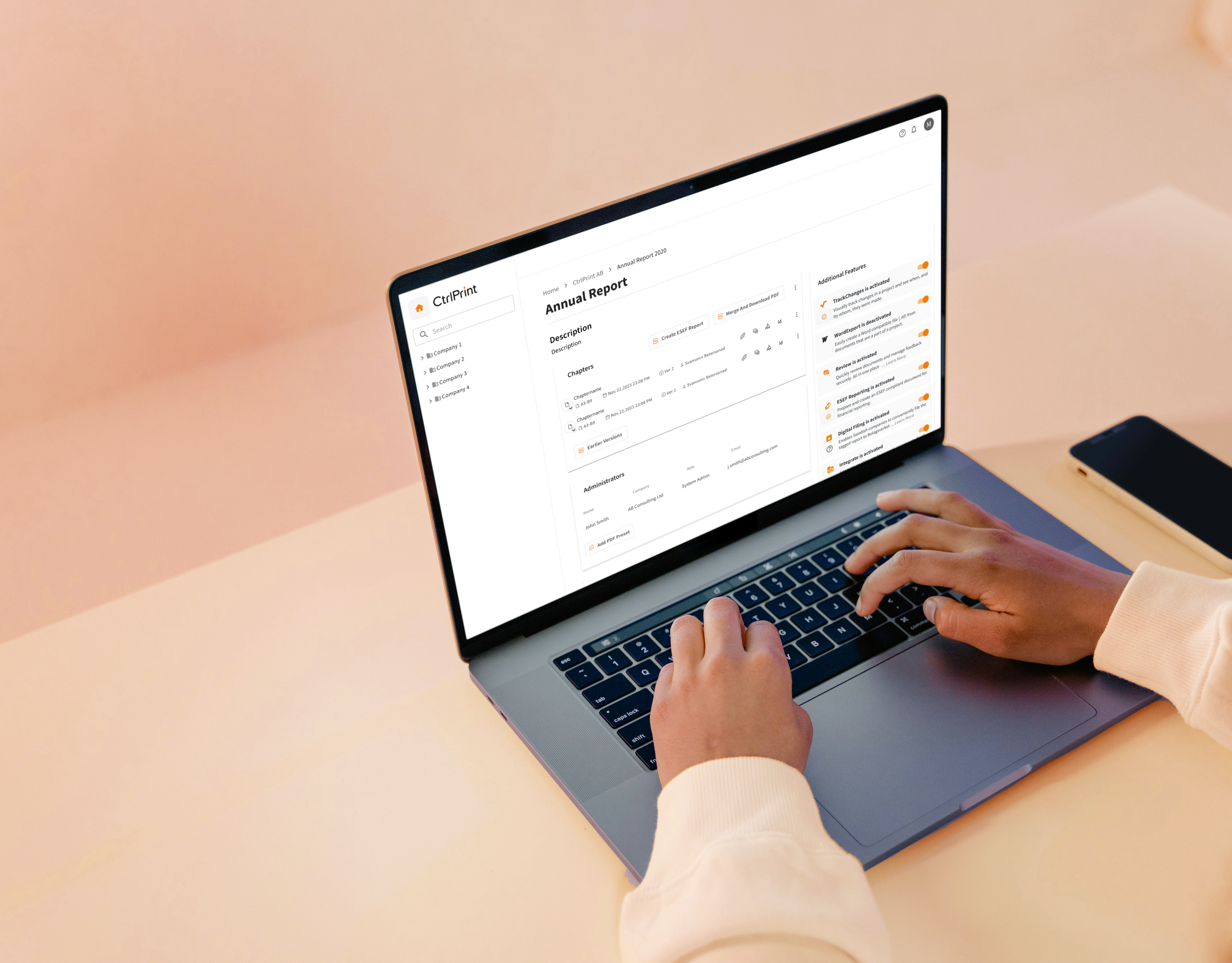
The CtrlPrint platform ensures a collaborative environment where finance, design, communication, legal, and sustainability teams work together, guaranteeing a compliant, beautifully designed, and error-free result every time.
Deliver compliant reports with CtrlPrint.
Request a demo
In the Netherlands, the landscape forESEF (European Single Electronic Format) and CSRD (Corporate Sustainability Reporting Directive) is currently...
For companies operating in Germany, Austria and Switzerland, the financial reporting year of 2026 represents a crossroads between the country’s...
The global standard: What is IFRS? The International Financial Reporting Standards (IFRS), governed by the IFRS Foundation, provide a "common...