

1 min read
Sustainability report design: beyond hard data & compelling stories
For corporate reporting leaders, the annual sustainability report is the ultimate balancing act: you are juggling rigorous ESG data and the need to...
3 min read

For years, the phrase "internal controls" lived deep within audit committee papers, while "digital tagging" was viewed as a technical after-thought handled by external agencies. Come 2026, these two streams converge.
With the full implementation of Provision 29 of the 2024 UK Corporate Governance Code, boards will be required to make a high-stakes public declaration regarding the effectiveness of their material internal controls. Simultaneously, the UK Single Electronic Format (UKSEF) continues to evolve, meaning these declarations are not just text on a page; it is a structured data point that investors and machines will scrape, analyse and compare instantly.
For reporting leaders, the challenge is no longer just drafting a narrative; it is building a rigorous workflow where the integrity of the text and data and the accuracy of the digital tag are preserved from the first draft to the final disclosure.
The 2024 Code updates have transformed the annual report from a passive disclosure into a material demonstration of proof. For financial years beginning on or after 1 January 2026, your board must declare the effectiveness of all material controls; financial, operational and compliance.
However, in the era of UKSEF, this declaration effectively becomes a "digital asset". If your board signs off on a statement of effectiveness, but the underlying XBRL tag attached to that text is misapplied or disconnected during a last-minute edit, you create a dangerous discrepancy between the human-readable report and the machine-readable data, which can lead to severe regulatory and reputational issues.
The "comply or explain" principle still applies, but justifying a digital tagging error in a high-profile governance declaration is a reputational gamble few boards will want to take.
Preparing for this shift requires a fundamental review of how your annual report is constructed. To sign off with confidence, you need an audit trail that covers both the narrative and the data.
This brings us to the "translation layer"—the critical moment where financial data leaves your secure ERP environment and enters the design and tagging phase.
In a typical workflow, data travels from an ERP system into Microsoft Excel for consolidation before it reaches the final report layout. This "last mile" is where risk accumulates for both Provision 29 and UKSEF compliance.
The risk is not the use of Excel, but the lack of governance surrounding it. If a financial figure is updated in Excel, does the corresponding number in the InDesign layout update automatically? More importantly, does the XBRL tag attached to that number update?
In disjointed workflows, the answer is often "no".
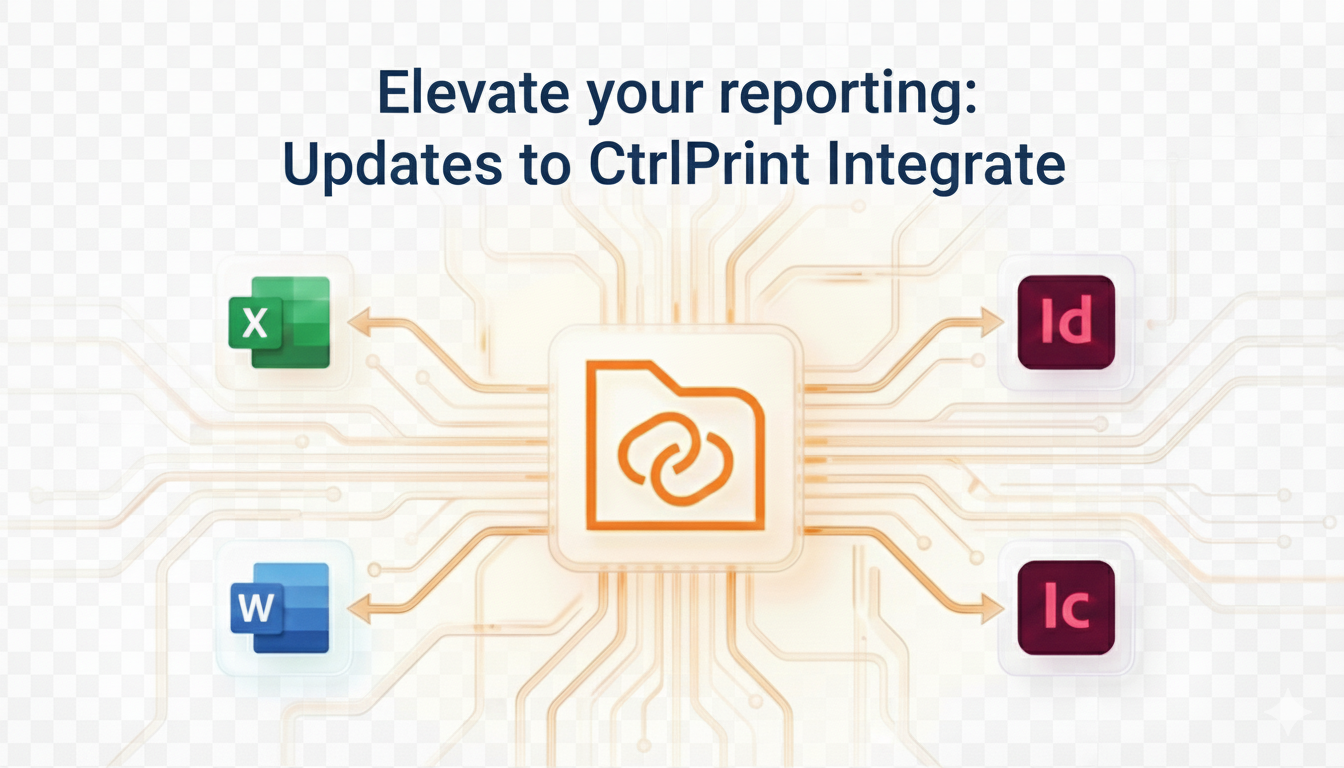
To satisfy the rigour of UKSEF, reporting leaders must move away from manual copy-pasting. Instead of trying to eliminate the translation layer, the goal should be to professionalise it. A secure platform like CtrlPrint acts as a bridge, allowing you to retain the flexibility of Excel while enforcing a strict audit trail. By linking your Excel data sources directly to the InDesign layout, you ensure that the "single source of truth" flows securely into the report, keeping both the visual number and the digital tag aligned.
One of the most debated aspects of the new regime is the timing of the work. The old "linear" model—write, design, then tag—is too slow for the scrutiny of 2026.
Integrating the tagging process directly into the drafting workflow is essential. However, this does not mean the tagging software must be "built-in" to the design software in a way that limits creativity. There is a distinct advantage to using a specialised tagging module that sits alongside your design layer—effectively a "bolt-on" solution that creates a parallel workflow.
This architecture, employed by platforms like CtrlPrint, separates the visual layer (Adobe InDesign) from the compliance layer (XBRL Tagger). This allows your compliance team to tag narrative disclosures and financial tables while the design team is still refining the layout. It prevents the "glossy" design from being broken by compliance requirements, a common issue when trying to force-fit tagging into non-specialised tools.
Experts strongly advise using the 2025 reporting cycle as a "dry run" for both Provision 29 and your UKSEF tagging strategy.
Provision 29 and UKSEF share a common goal: trust. One builds trust through governance transparency, the other through digital data integrity.
The shift to a public declaration of effectiveness demands a reporting process that is as robust as the controls it describes. By acknowledging the realities of the data workflow—specifically the critical role of Excel and the need for parallel tagging—you give your board the visibility they need to sign off. This starts in 2026, but the work to build a digitally resilient workflow starts now.
Request a demo of CtrlPrint here.

In recent years, the audience for corporate reporting has fundamentally changed. While we still write for the human analyst, we are now equally...
%20CtrlPrint%202026%20highlights%20and%20roadmap%20.pptx%20(1).png)
Reporting teams work under constant pressure: numbers change late, reviewers add comments across multiple chapters, and deadlines leave little room...
1 min read
For corporate reporting leaders, the annual sustainability report is the ultimate balancing act: you are juggling rigorous ESG data and the need to...

1 min read
The modern corporate reporting landscape is becoming significantly more demanding as organizations face new regulations, tighter deadlines, and...

1 min read
In this article, we will cover everything listed companies in the UK need to know about UKSEF, including who is required to follow this format, the...