

UKSEF and provision 29: preparing for the 2026 reporting shift
For years, the phrase "internal controls" lived deep within audit committee papers, while "digital tagging" was viewed as a technical after-thought...
Corporate reporting is an important aspect of business communication. It enables companies to share their financial performance and other vital information with stakeholders such as shareholders, investors, and employees. However, creating corporate reports can be a daunting task, especially when dealing with multiple stakeholders and last-minute changes. That’s where CtrlPrint comes in.
CtrlPrint was created in the late 90’s by a corporate reporting agency who felt there should be a more efficient, less stressful way to create corporate reports. Today we work with more than 300 different agencies and communication advisors all over the world. We work with full-service agencies, freelance originators, project managers and writers – but also translators and corporate accounting consultants.
One of the biggest challenges in corporate reporting is managing version control and last-minute changes. This is especially true when deadlines are approaching, and there is a lot of pressure to get everything right. We know because we’ve been there.
One situation you may recognise is the last few hours before the big send-out to the Board, and the CFO realises that he wants to add a “short” explanation to the results. You get the sentence from your project manager at the client. You manage to get some time from the typesetter to make the suggested changes. Only to realise that the changes create an overlay and everything moves. Now, you need to call the project manager to see how to best solve it. Can you remove something to make some space or what should you do? Time’s running out and you need to solve this at once.
If you were working in CtrlPrint instead, the CFO or the project manager at the client could make the changes directly in InCopy – no middleman.
For years, the phrase "internal controls" lived deep within audit committee papers, while "digital tagging" was viewed as a technical after-thought...
For corporate reporting leaders, the annual sustainability report is the ultimate balancing act: you are juggling rigorous ESG data and the need to...
The short answer: Ideally, your sustainability report should be published simultaneously with your Annual Report. For most companies with a December...
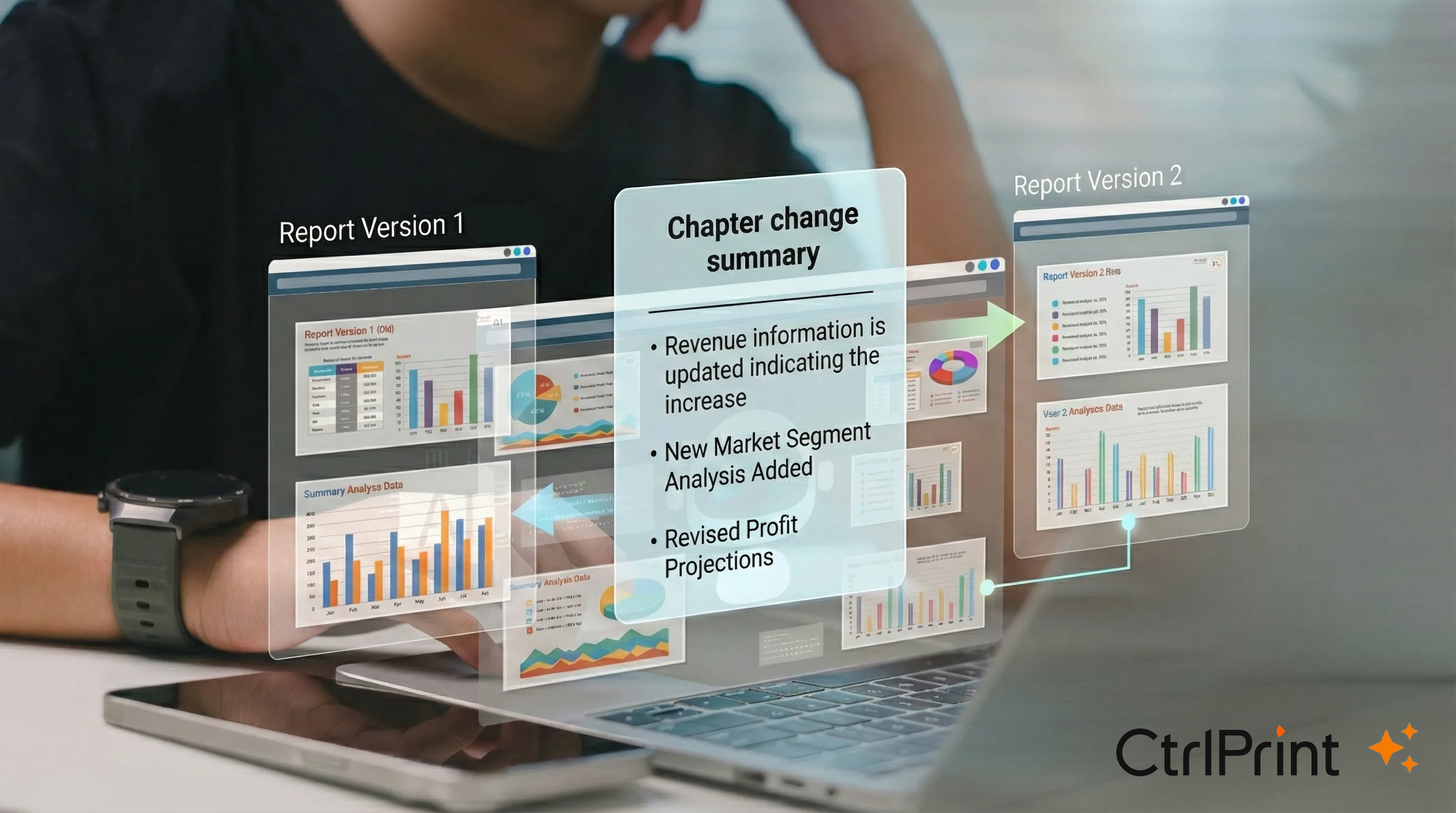
Reviewing the changes between versions can take up considerable time. Version number has changed, but what is actually new? Keeping track of progress...

Designing for compliance and creativity If you're a brand designer, consultant, or creator in the corporate and sustainability reporting arena, you...
Year one – Adapting to new standards As the first year of the implementation period of the Corporate Sustainability Reporting Directive (CSRD), we...