Finland digital reporting update: PRH mandate, what you need to know
The digital transformation of corporate compliance in Finland just took a massive leap forward. Following a recent webinar by the Finnish Patent and...
3 min read
The digital transformation of corporate compliance in Finland just took a massive leap forward. Following a recent webinar by the Finnish Patent and Registration Office (PRH), the roadmap for mandatory digital financial reporting is clearer than ever.
What was once a voluntary framework is rapidly turning into a strict, phased legal mandate. Finland is extending digital financial reporting from public corporations to all limited companies.
If your business operates in Finland, here is a breakdown of the upcoming legislative timelines, technical requirements, and what they mean for you.
The transition to mandatory structured digital filing follows a phased rollout designed to give businesses time to adapt. However, the clock is already ticking.
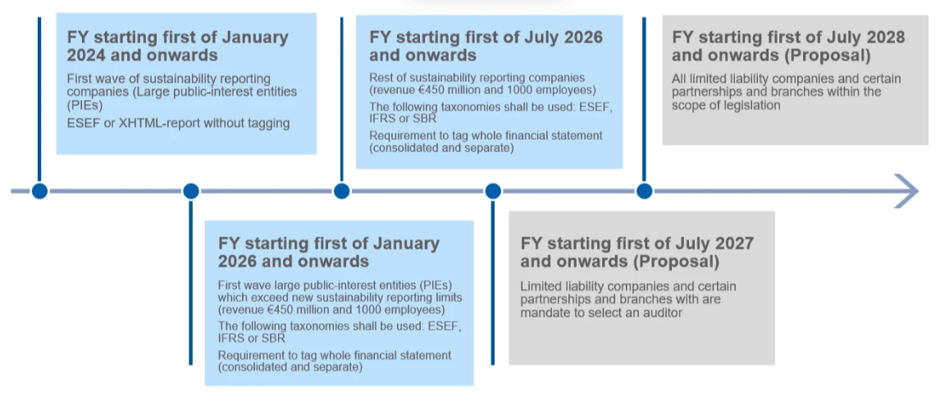
Source: https://www.prh.fi
The core technical goal is for companies to submit a reporting package consisting of human-readable XHTML integrated with validated, machine-readable iXBRL tags.
Depending on your company's accounting standards and listing status, you will need to navigate different digital "dictionaries" (taxonomies):
| Taxonomy | Administered By | Application Scope |
| ESEF | ESMA | Strictly for the consolidated financial statements of publicly listed entities. |
| IFRS | IFRS Foundation | Disclosures prepared under international IFRS Accounting Standards. |
| SBR | PRH | Individual and consolidated statements compiled under Finnish Accounting Standards (FAS). |
| ESRS | EFRAG / ESMA | Designated for sustainability reporting (not yet fully active for regular filings). |
| Staksonomia | PRH & Suomen Tilintarkastajat | Reserved for generating digital Auditor’s Reports (slated for future activation). |
For the vast majority of Finnish businesses filing under Finnish Accounting Standards (FAS), the Standard Business Reporting (SBR) taxonomy is the anchor framework.
Engineered on the global Data Point Modeling (DPM) standard, the SBR taxonomy features distinct architectural quirks that software engineering and accounting teams must account for:
Tagging is strictly mandatory across all primary financial statements (Income Statement, Balance Sheet, and Cash Flow Statement). Explicit tags are also enforced for employee numbers, parent company details, and subsidiary listings.
Once the XHTML/iXBRL reporting package is generated and validated, it must be routed through one of the PRH's designated intake paths:
For more filing support, contact the Finnish Patent & Registration Office on their website.
Whether you need to upgrade your internal financial workflows or adapt your software solutions to support the new SBR taxonomy architecture, early preparation is key, ensuring your business reporting will be compliant well ahead of the 2027 and 2028 deadlines.
Contact our experts if you need help with your next corporate reporting season.
The digital transformation of corporate compliance in Finland just took a massive leap forward. Following a recent webinar by the Finnish Patent and...
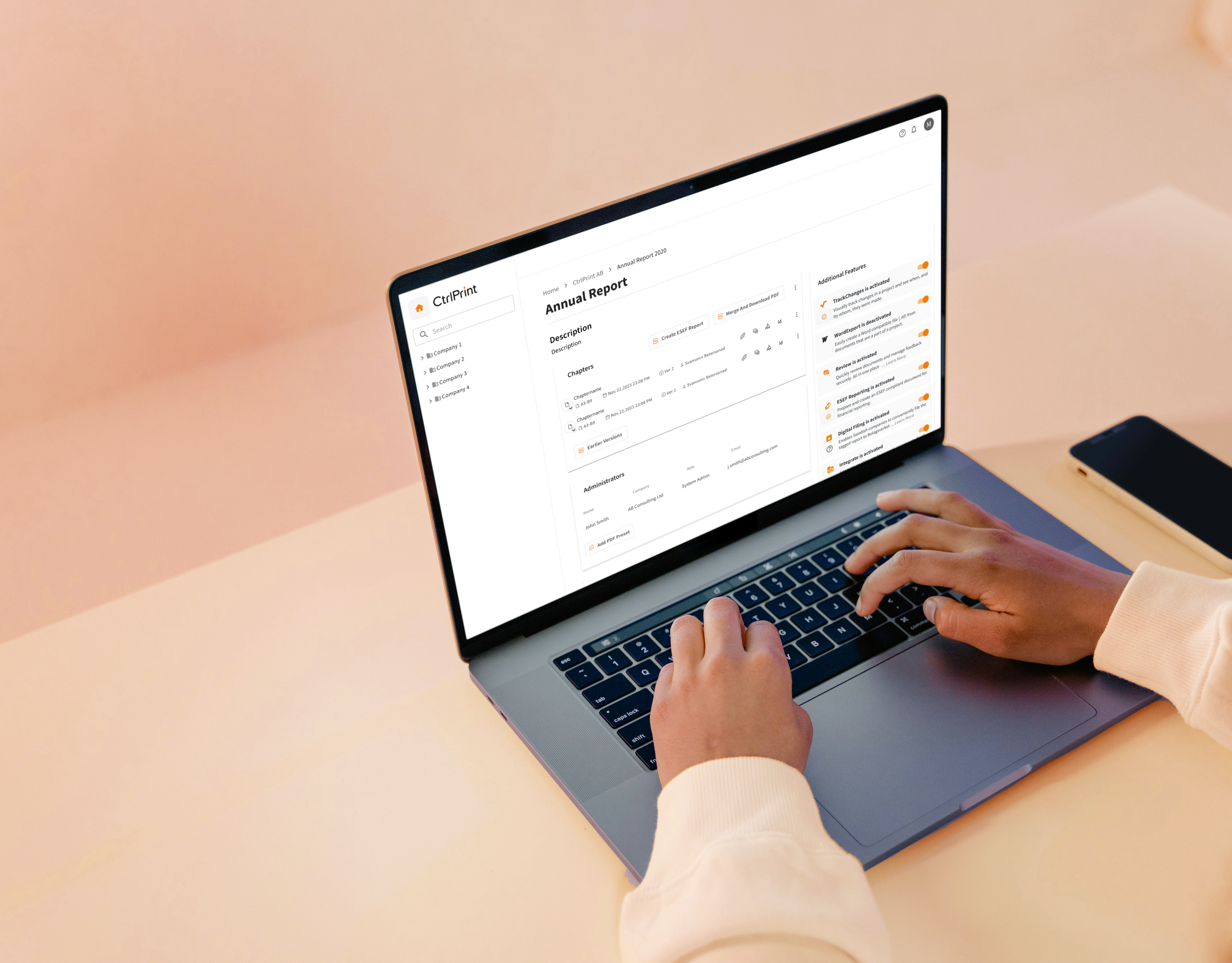
The End of a Project Checklist The months before the next reporting season are the perfect time to get ready. Preparing early ensures a smooth...
In recent years, the audience for corporate reporting has fundamentally changed. While we still write for the human analyst, we are now equally...

1 min read
ESEF (European Single Electronic Format) is the mandatory electronic reporting format for annual financial reports published by issuers whose...
1 min read
 Kaisa Heikka : Oct 27, 2025 2:00:00 PM
ESMA has released the updated ESEF Reporting Manual for year 2025 reporting. The latest edition introduces a few clarifications and tighter...

1 min read
Shaping the future of our new compliance-first workflow